Why did I make this?
This small game was made over ~4 days for the GMTK 2026 Game Jam.
The theme was countdown.
A jam is a friendly competition between game developers who are tasked with creating a complete game, based on a set theme, and in a very short period of time.
I took part in the previous year’s gmtk and was planning to do it again this year, to close my running three months game jam streak.
This one was special, probably being the biggest of the year, with more than 10 thousands games!
As you will discover, it turned out to be my best game jam experience so far, with a very good-looking result.
Before the jam
Luckily, the team from the previous jam agreed to do it again; and Willy invited two pros of the game industry: VFX artist Orson and developer Ju2pom.
We had a complete team of 3 developers and 2 artists, I knew there was a lot of potential, even if there was already more than 30 thousands participants…
First evening
The jam started at 7pm, with the live reveal of the theme.
By contrast to the previous year’s (which was loop), I found countdown to be easier to work with.
Each member of the team brainstormed by themselves for half an hour.
I explored the two words count and down, which are found in the theme word.
Then I tried to find ideas where the countdown was a part of the gameplay. It reminded me of an improvisation theatre exercise where you have to count in your head and be synchronized with the others. This showcase human beings’ difficulties to follow a regular rhythm.
This sparked the idea of a one-button incremental game where clicking at the right time would get more and more complicated, maybe by adding extra buttons.
After presenting our ideas to each other, we had to choose between 8 of them.
At first, we decided to make a shortlist by each one of us voting for their three favourites, and we would decide on the final one the following day.
But we quickly realized that one idea was getting the most votes.
We picked the one-button incremental idea and called it a day early.
I was relieved that we locked-in on the concept right away, rather than putting this one day back.
Second day
We took the morning to write a simple Game Design Document to agree on a shared vision of the project.
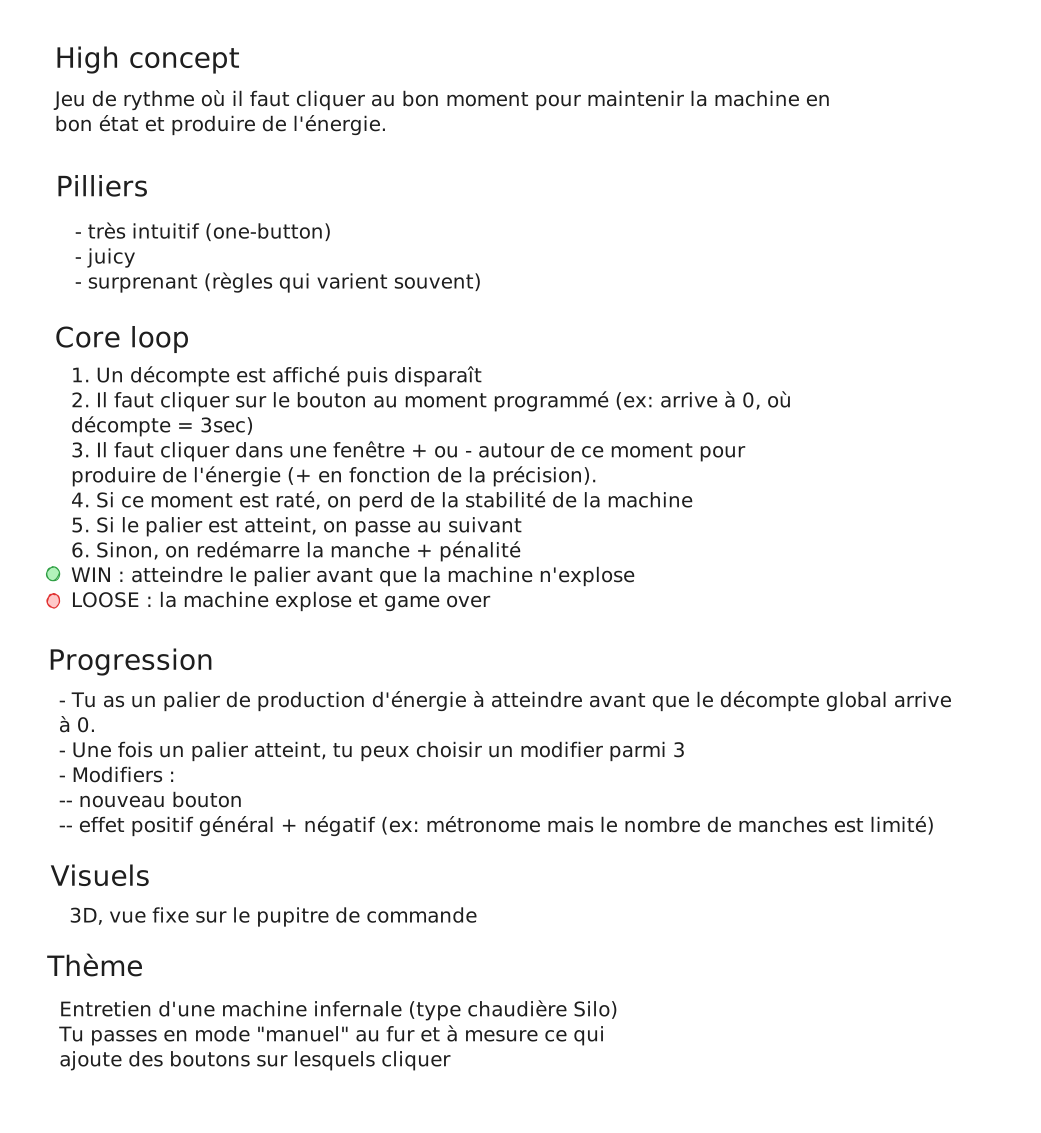
A very simple GDD
As you can see, it is very short, but it answered all our main questions (e.g. design pillars, progression, win/loose conditions) and provided a strong base that we shouldn’t stray from.
During this process, we found the strong theme of handling an infernal machine.
Then we began development:
- Itooh and Ju2pom started programming.
- Orson and Willy searched references and thought about the art direction.
- I thought about game design: buttons types, screen layout and modifiers.
After two hours, I joined programming, and we quickly had a working prototype, because there was no complex core feature as in some of my previous games.
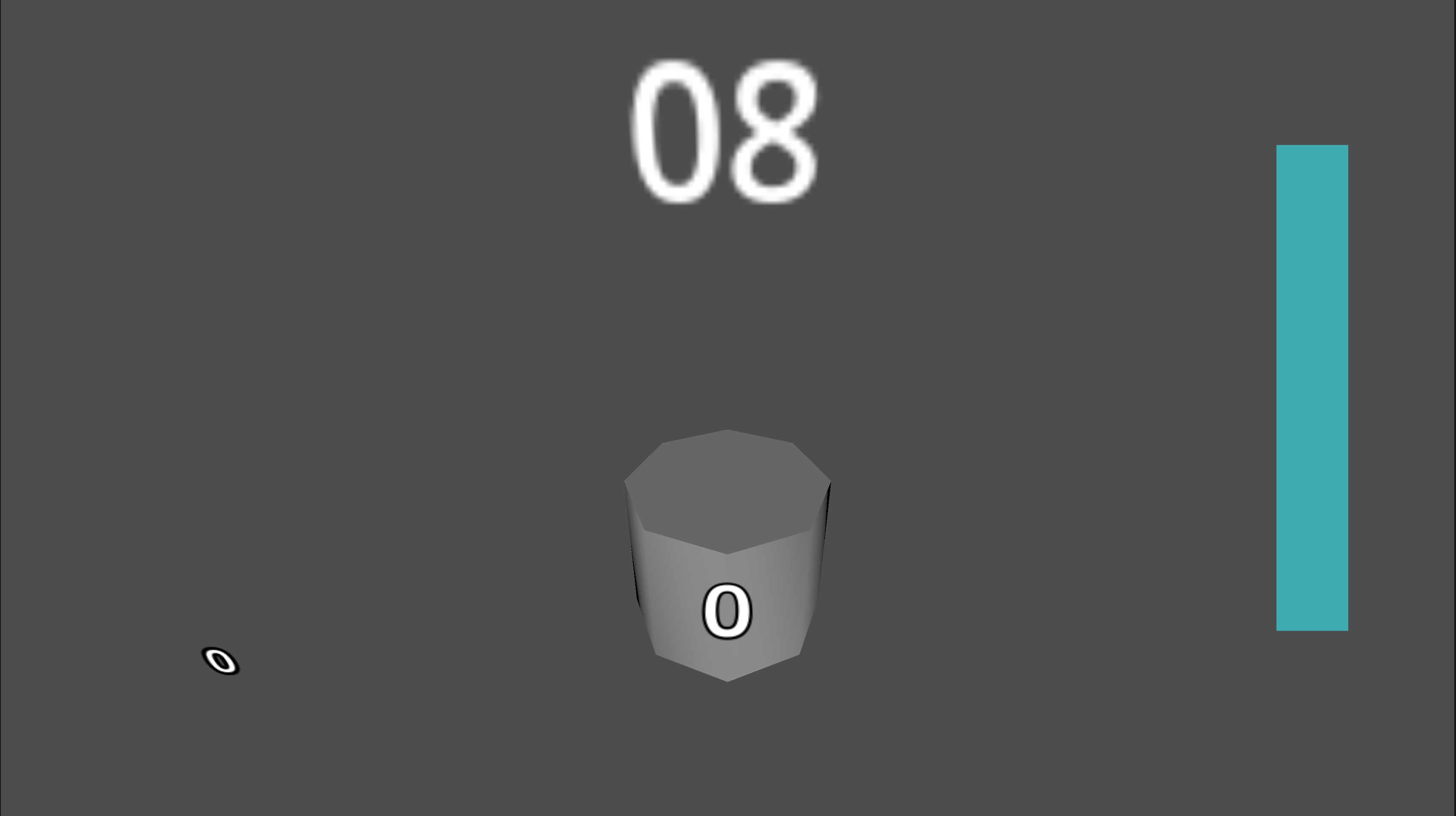
The very first prototype
Orson and Willy made a first version of the 3D environment, coming up with mechanical rollers for displaying digits (like score) which added a nice immersive touch.
Third day
I coded the rest of the systems to complete the main game loop.
Ju2pom integrated the 3D art.
Itooh began work on the music and sounds.
Willy improved the 3D assets and Orson made them come alive with great visual effects.
With the two other devs, me made regular sync calls and included the two artists if it was necessary.
We discussed our technical implementations, which I wasn’t used to, and that was cool.
I wanted to host playtests in the evening, and this deadline was respected.
But no tester was available, so we continued working on the looks and UI.
The day ended for me at a reasonable hour, almost like a common workday, which allowed me some rest.
Fourth day
On the contrary, my teammates were at it all night long, and I discovered an already very polished game in the morning: sounds, music, VFX, shaders…
I knew this game would do well, art-wise.
From that time on, we had to make it good on the gameplay side too.
I implemented the choice system, making the player choose a new button between each round.
Ju2pom made the button that needs to be pushed several times and started working on the modifiers.
Willy made the UI art.
I refactored the code to centralize all balancing parameters, allowing quick iterations to “turn the knobs right”, and created the first three rounds with fixed choices.
Finally, I hosted three playtests, which led to valuable feedback, in particular concerning the onboarding part (understanding the game’s rules).
Most importantly, players liked the game, and played again and again to do critical hits (sounds familiar, eh?).
Despite being happy with what we achieved so far, I was still stressed because of next day’s deadline.
Last day
For the last stretch, we had a big day of polishing ahead.
Thanks to the playtests, we were able to improve overall UX.
We created the page on itch.io and really took the time for balancing.
We tried to account for every player’s choices and skill.
I understood that balancing is always very long, and during game jams, you need shortcuts to balance 80% of cases with 20% of actions.
For example, despite wanting random choices of buttons and modifiers at first, we ended up making them fixed to ensure their balancing.
Besides, we restricted the initially three choices to only two, allowing us to focus on balancing two progression paths instead of three.
The advanced rounds, modifiers, and gameplay config system allowed us to quickly make changes and test.
We encountered a nasty bug making the player fail randomly, which was very frustrating.
After fixing everything, we all tested the game half an hour before the deadline.
And we were done!
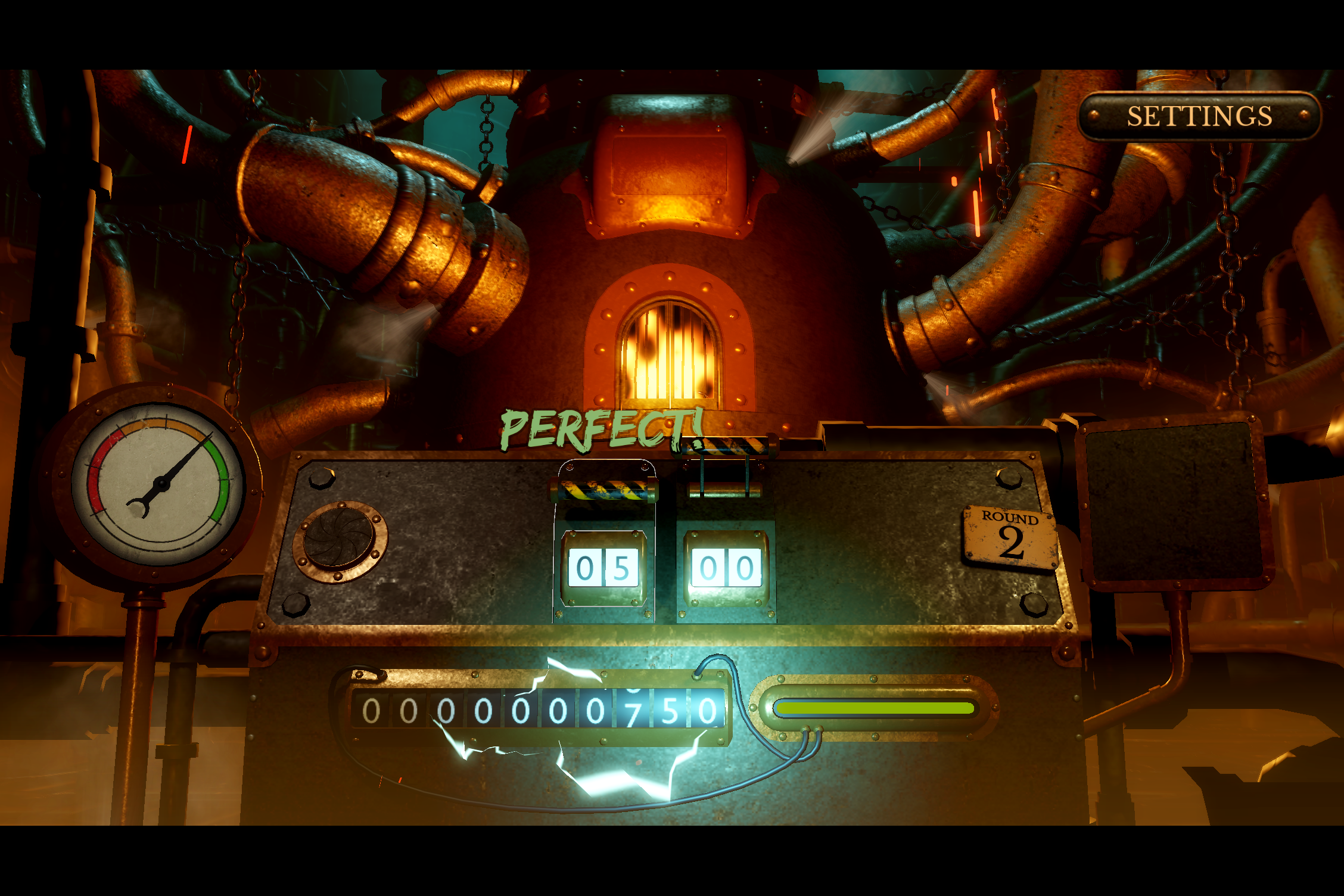
The final game with all bells and whistles
Right?
Ô rage ! Ô désespoir ! Ô vieillesse ennemie !
The nasty bug was back (because of the peculiar way tools scripts are handled in Godot), hurting the user experience we spent so much time improving.
But it was worse: it crashed desktop versions, which we had to remove from the page, leaving only the slow-loading web game.
We couldn’t fix anything, the deadline had passed, and players would have to deal with this degraded release.
Despite that, I was very pleased with the professional team I worked with, everyone was so involved!
And I never published a game with this level of polishing.
Even if I was a bit tired and stressed, I was grateful to have made the choice of preserving my evenings and nights, which made this experience more enjoyable as a whole.
Ratings
A record-breaking 10,554 number of games was published.
I played 17 of them, in 1 hour per day sessions. It was more bearable and pushed me to play more than previous jams.
I found very creative ways of exploring the theme.
I played Code Down, a very good game (which is nowhere near the top of the charts, which says much about the absurd number of good games in this game jam).
We received glowing comments and the same exact number than previous year: 38 ratings.
We ranked #354 in Artwork (top 3%!) which is awesome.
And #641 in Audio, thanks to the mysterious industrial vibe Itooh created.
As often, I was a bit sad regarding the Enjoyment and Creativity ratings, where we scored #2681 and #3162, because these are linked to the design itself, a part I feel more accountable for.
By playing top games, I wondered how people could pull off this level of quality and polishing in just…4 days.
Key takeaways
- Good moderating techniques (like solo brainstorming or shortlist voting) are needed with a team of 5 people to stay time-efficient.
- For a 5 people team, a short GDD is the best tool to agree on a common vision.
- With a reliable team, I can do workday-like hours, which is better for my health.
- A centralized balancing system allows quick iterations.
- Playing in short sessions over the voting phase makes it more bearable to play a lot of games.
After the jam
As soon as ratings were revealed, we pushed fixed builds and brought back desktop versions on the page.
Some comments were liking the idea of playing this game on mobile, so that’s an idea we might explore.
I think it could be a great design challenge to effectively make the choices between rounds a bit more random, to lean more on the rogue-lite aspect.
Besides, there is still some work to do on optimization, to reduce the size and the loading time of the game.