Why did I make this?
This small game was made in 2 days for the Global Game Jam 26.
A jam is a friendly competition between game developers who are tasked to create a complete game, based on a set theme, and in a very short period of time.
The theme was mask.
After two memorable experiences with the GMTK 25 and Brackeys Game Jam 2025.2 last year, I was happy to join the Global Game Jam, an event happening simultaneously in hundreds of physical places around the world.
I was eager to finally do a jam in person and meet fellow local game developers!
First evening
In France, the jam started at 6pm.
After the theme reveal, we sat down with a group of 7 people for brainstorming.
My go-to strategy for this is putting all definitions of the word on a mind map and trying to come up with associated gameplays.
As a group, we found numerous ideas:
- A co-op game in which you play as two children stacked on top of each other who must keep their balance to pass for an adult at an R-rated movie screening.
- A puzzle game where you need to remove a face mask carefully without breaking it.
- A WarioWare-like minigame in which you need to make a quick-and-dirty mask with random pieces.
I chose to pitch the last one and partnered with 2 people from the brainstorming group:
And our team was complete!
We agreed on a very small scope, but with a polished experience that feels great.
I took some time to set up our tools: a Notion page to assign and track tasks, a GitHub repo to collaborate on the code, and a Discord group to send assets.
At the same time, Itooh started working on our main technical hurdle: calculating the area of a group of disjoint pieces. This was needed to compare the player’s mask to the required shape.
Finally, Neige started working on the visual identity of the game.
We planned to have a playable prototype by the next day’s noon.
Second day
This was our only full day of work, because the jam will end at 3:30pm tomorrow.
Itooh cracked the area calculation algorithm, and I spawned simple random pieces that could be dragged and dropped with the mouse.
We didn’t get something playable until 6pm, mainly because I was away for 4 hours and we had annoying bugs and quality-of-life issues to tackle.
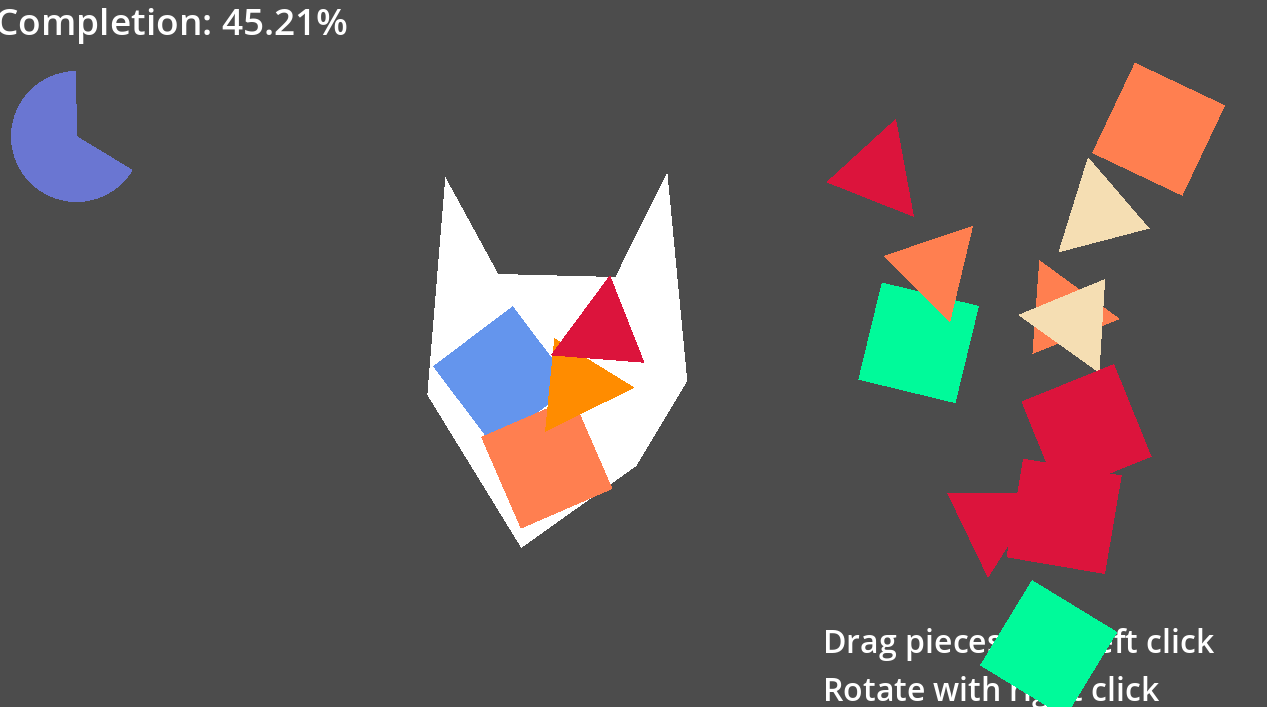
The first assets were already made, but we chose to stick with geometrical pieces for our first playtests.
However, because we tried to minimize conflicts in code by building modular pieces, we were able to make further adjustments pretty quickly, and by the end of the day I had integrated the first assets.
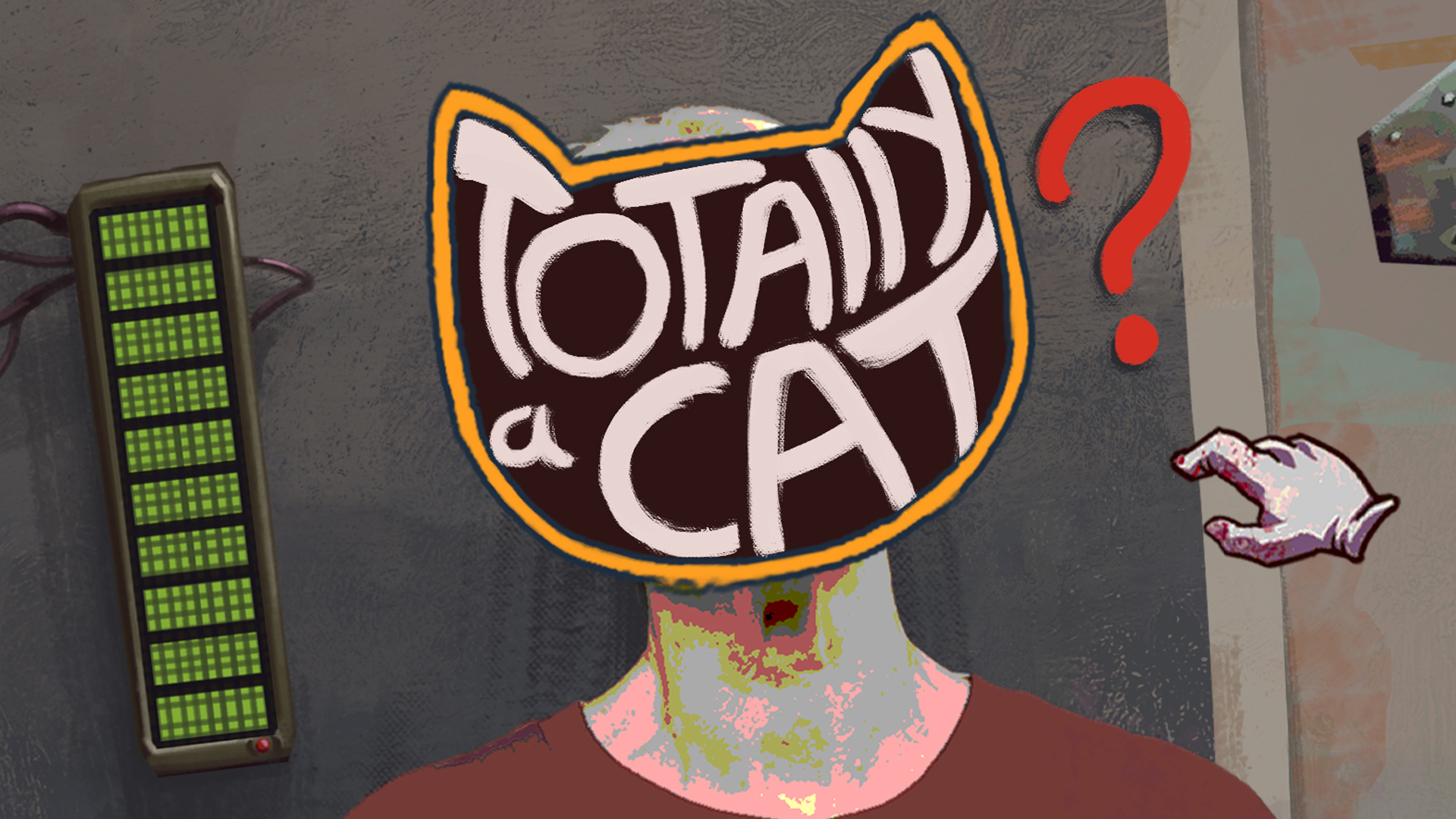
Because of our dystopian theme, Neige decided to go full Orwellian with a dark and weird direction.
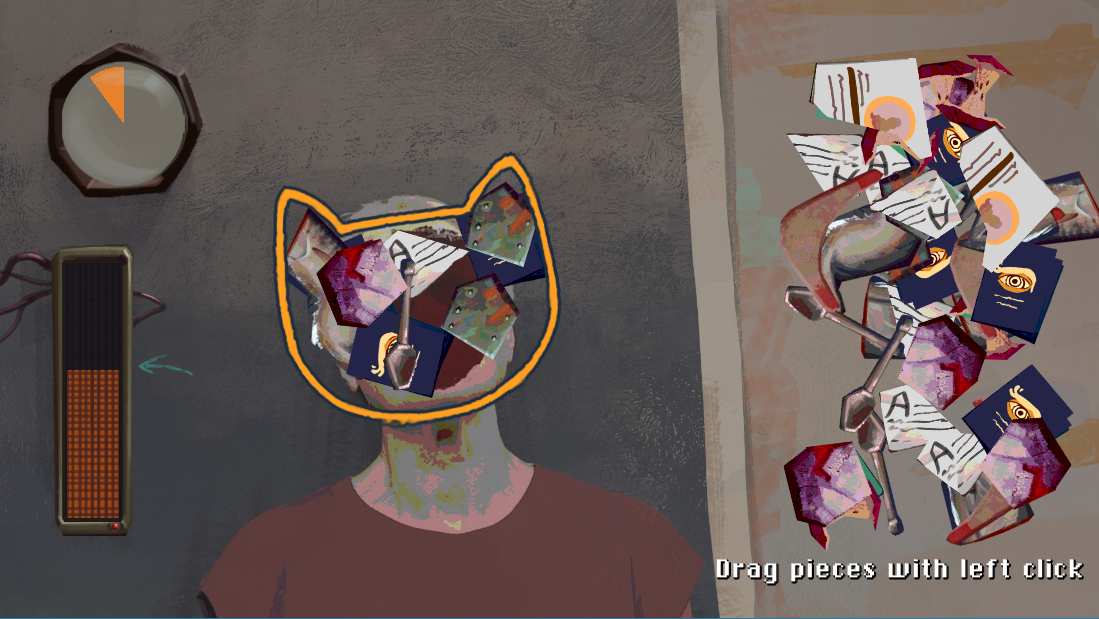
We went from an abstract puzzle game with generic shapes to a clandestine workshop making strange masks out of odds and ends!
Last day
Thanks to the professionalism of my team members, this jam experience was the least stressful for me and I knew we will deliver something good in the end.
Itooh worked on dynamic music and SFX, and I added a final eyes phase that didn’t count for scoring, but transformed a player made blob of pieces into a mask with a strange mix of weird and silliness.
To balance difficulty, we decided to spawn way more pieces (50!), to create a sense of pile of junk, where the challenge came more from choosing the right piece to use, rather than perfectly filling the mask outline.
At that time, we knew we had come up with something good.
The first build was uploaded at noon with nearly all art assets.
Then the rest was polishing, polishing, and polishing, finishing on time, at 3:30pm.
A bit exhausted, we got told that we had 1 hour left to upload our game.
After a bit of thinking, we decided to use this time to push further (that’s a perk of Godot’s very fast build).
We were even able to add a second level in the form of a second mask, which we had dismissed before to keep a small scope.
At 4:27pm, we were done: our last polished version was online.
In the physical place where the jam took place, every team presented their work on stage, but we didn’t have time to play the games on the spot.
There were a lot of different games, even a VR-one, were the headset was a diving mask!
Playing others games
I’m used to the review process of most online game jams, when you have to play others’ games and score them to create rankings.
It seems it is not a thing in Global Game Jam, but I wanted to play the games anyway, so I used their clunky search engine to select only web games (usually hosted on Itch.io) and played a few of them.
I saw good concepts and pretty art, but nothing really caught my eye.
Key takeaways
- A good team reduces stress.
- The short duration and the physical aspect of a jam bolster team engagement.
- A strong artistic direction changes everything.
- A tight scope allows a polished core experience that feels “finished”.
- A technical modular approach takes more time at first but saves a lot in the final sprint.